
Siemens Energy India on Tuesday posted an over 31 per cent year-on-year increase in its net profit to Rs 360 crore during July-September quarter, mainly on the back of higher revenues. Its net profit stood at Rs 274 crore in the quarter ended September 2024, a company statement said.

Siemens's share price has lost ground in the past few sessions following weak management commentary. The management indicated challenges to the growth outlook due to stagnant private capex and concerns over semiconductor shortages for digital industries. Government infra-spending may regain momentum from January 2025.

Siemens Information Systems, a business unit of Siemens India, part of German technology giant Siemens is understood to have laid off around 500 people over the last five days.


Among the 30 Sensex companies, Larsen & Toubro, Power Grid, NTPC, State Bank of India, Reliance Industries and HDFC Bank were the biggest laggards. Sun Pharma and Nestle were the only gainers.
.jpg)
Globally, the company intends to cut expenses by $7.8 billion by 2014.

Post-election capital expenditure (capex) has been weak at 2 per cent year-on-year (Y-o-Y) in M9FY25. The FY25 revised estimates (RE) indicate 7 per cent growth in FY25 against FY24, implying 21 per cent Y-o-Y growth in Q4FY25 government capex.

As order books gain from India's increased capital outlay, some large capital goods and engineering companies are together spending over Rs 11,500 crore in creating new facilities, data shows. Nine engineering and capital goods companies, where data was available, including Siemens, Larsen & Tourbo (L&T) and KEC International, have a combined capital expenditure (capex) of about Rs 11,500 crore or more. Others such as ABB India and Thermax Global are also adding capacities.

74 of these fatalities were reported by 8 companies: Coal India (21), L&T (14), Vedanta (13, of which Hindustan Zinc reported 7), Tata Steel (7), Power Grid Corporation of India (7), JSW Steel (6), and ONGC (6).

Operating margins have been the primary driver of corporate earnings in India in recent quarters, despite revenue growth suffering from weak consumer demand. Companies across sectors have reported a sharp improvement in earnings before interest, tax, depreciation, and amortisation (Ebitda) margins over the past two years, benefiting from lower commodity and energy prices. Higher margins more than compensated for slower revenue growth, resulting in double-digit growth in net profit for five consecutive quarters.

'The deal pipeline across products is robust for 2024.'

For the first time since 2001, promoter stake in BSE 500 decisively below 50%

While Nifty 50 reflects changes in 40 years, it also shows what is missing: Low-cost manufacturers at one end, and deep-value players at the other. Also missing are technology players, observes T N Ninan.

Given the security dilemma prevailing between India and China, India should curb the operation of Chinese telecom companies in India, asserts Dr Rup Narayan Das.

Finance Minister Nirmala Sitharaman on Tuesday unveiled a Rs 39.45 lakh crore Budget with a view to fire up the key engines of the economy to sustain a world-beating recovery from the pandemic. This was Sitharaman's fourth Budget. While the taxpayers were left in the lurch, once again, was she able to cheer Corporate India?
.jpg)
Net profit grew 25.4% in Q4 but revenue growth, lower at 8.5%, suggests lack of volume expansion.

There is a lot of optimism as regards the defence, railway and manufacturing sectors.
.jpg)
Railway Board Chairman Arunendra Kumar said the discussions at the day-long meet involved an overview of five models of participative policy, framework of engineering, procurement and construction contracts and sectoral guidelines for foreign and domestic investment.
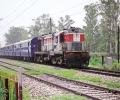
Indian Railways is in talks with Reliance Jio Infocomm to allow the Mukesh Ambani-led telecom major's use of its towers. The aim is seamless mobile and internet connectivity for passengers along the 67,368-km of tracks. The Railway Board has entrusted its RailTel Corporation arm to work on the modalities with Jio. The Jio tie-up is expected to bring down its telecom bill by at least 35 per cent from this financial year.

Asserting that the self reliant India programme will help revive the global economy, Prime Minister Narendra Modi on Thursday told global business community that his government aims to transform the country through access, inclusion and empowerment while also ensuring complete data security. Addressing the World Economic Forum's online Davos Agenda Summit, where he also interacted with global business leaders, Modi also said India offers a predictable and friendly environment from tax regime to FDI norms. He said Aatmanirbhar Bharat movement is committed to global good and global supply chain while the country's digital profile has been completely transformed.

Ajit Mishra, vice president, Research, Religare Broking, answers your queries.

Top companies across sectors -- automobile maker Maruti Suzuki, consumer electronics giant Samsung to IT giant Infosys -- have reopened factories and offices as India took its first steps towards resuming economic activity after weeks under a near-total coronavirus lockdown.

APAs are part of govt's aim to move to a non-adversarial tax regime.

Ajit Mishra, vice president, Research, Religare Broking, answers your queries.

New entrants could include Flipkart, Paytm, Cafe Coffee Day and ICICI Prudential Life Insurance, it says

Budget in the medium term aims to kick-start the investment cycle.

Ajit Mishra, vice president, Research, Religare Broking, answers your queries

Large and small businesses alike have delivered low-key performances.

'What we are actually missing in India is a platform wherein the government engages with cybersecurity experts, gets them employed and then utilises their capability to deter such attacks.'

Compared to their Indian peers, MNCs have higher return ratios.

Ajit Mishra, vice president, Research, Religare Broking, answers your queries:

Narendra Modi's speech at the India Economic Convention was the best such oration since Atal Bihari Vajpayee addressed the nation from the Red Fort in the aftermath of Kargil, feels Shreekant Sambrani.
.jpg)
Q1 results indicate more pain ahead, as slowdown has spread to more sectors, pricing power has come down and rising interest cost is eating into profits.
 © 2026 Rediff.com - Advertise with us - Disclaimer - Privacy Policy - Sitemap - Feedback - About us - Terms of use - Grievances